


NEWS
Scientists tackle conundrum: Antarctic sea-ice expansion under warming climate
Honolulu, April 14, 2022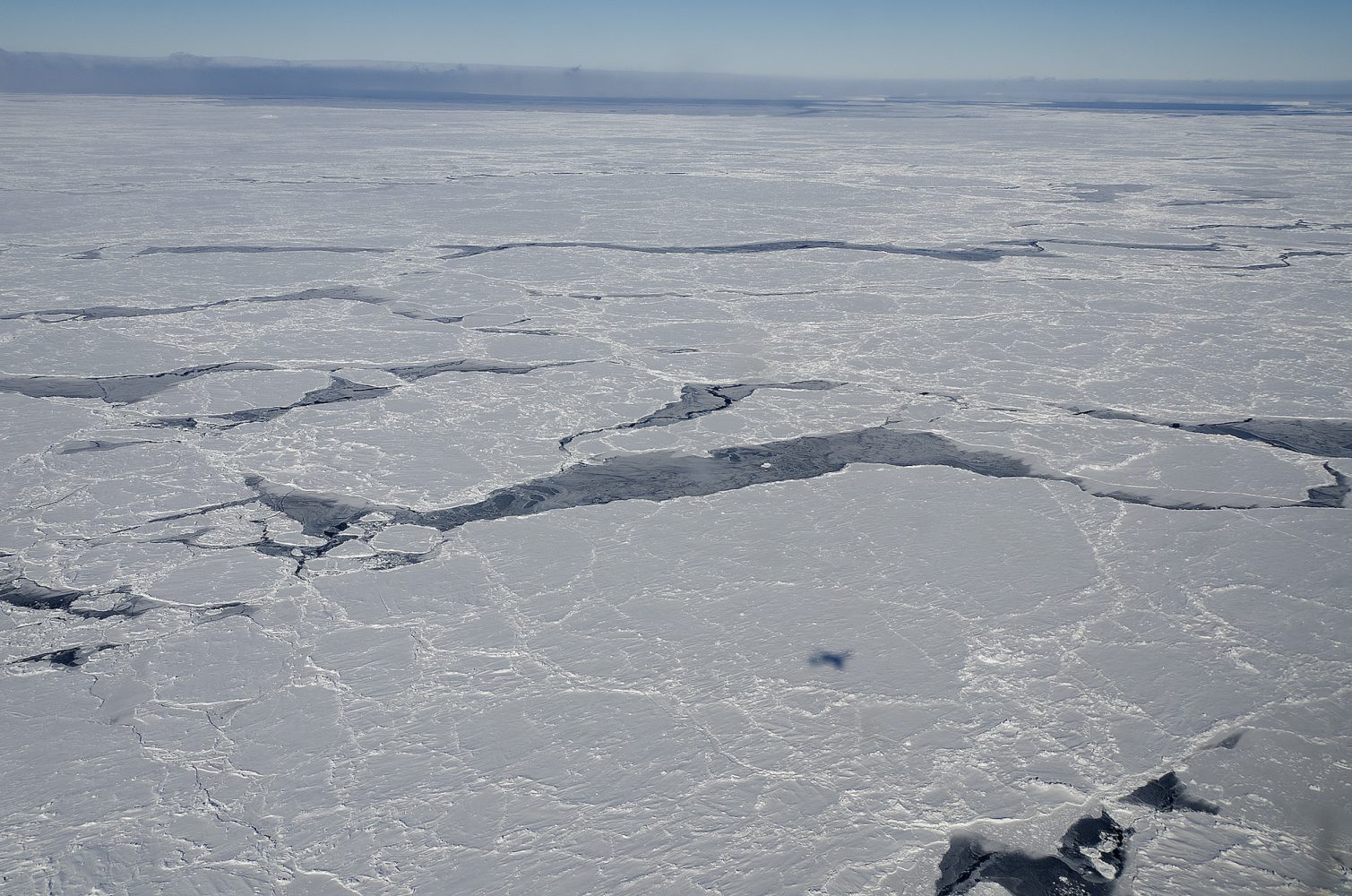
An international team of scientists, including IPRC's Malte Stuecker,published a new study in Nature Climate Change that shows that a "multi-decadal swing of the tropical sea surface temperatures and its ability to change the atmospheric circulation across large distances is in large part responsible for the observed sea-ice expansion since the late 1970s." For more details, read SOEST's news release.
(Photo credit: NASA/Michael Studinger).
Ocean plastic is creating new communities of life on the high seas.
Honolulu, January 6, 2022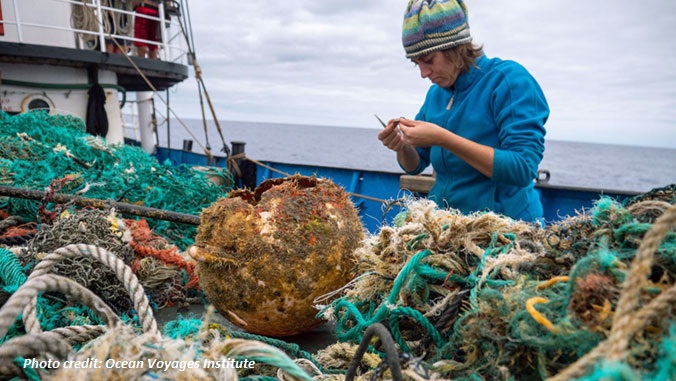
IPRC scientists Nikolai Maximenko and Jan Hafner co-published a commentary in Nature Communications which reported coastal species growing on hundreds of miles of trash in the North Pacific Subtropical Gyre, commonly known as the "Great Pacific Garbage Patch." For more details, read UH's news release.
(Photo credit: Ocean Voyages Institute).
Nobel prize in physics awarded to Klaus Hasselmann and Syukuro Manabe.
Honolulu, October 5, 2021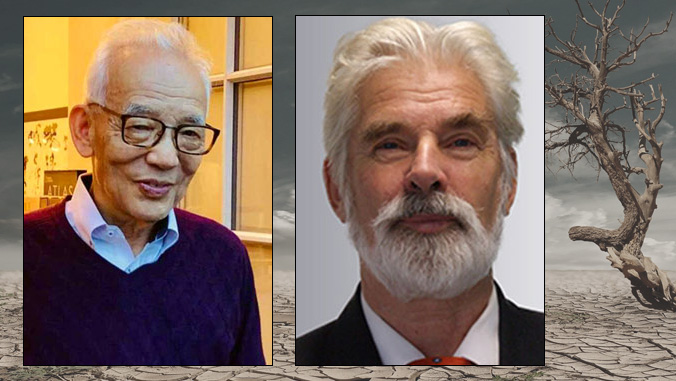
Klaus Hasselmann and Syukuro "Suki" Manabe share this year's Nobel Prize in Physics for "the physical modelling of Earth's climate, quantifying variability and reliably predicting global warming." For more details, read SOEST's press release.
SOEST scientists contribute to the International Panel on Climate Change (IPCC) report.
Honolulu, August 26, 2021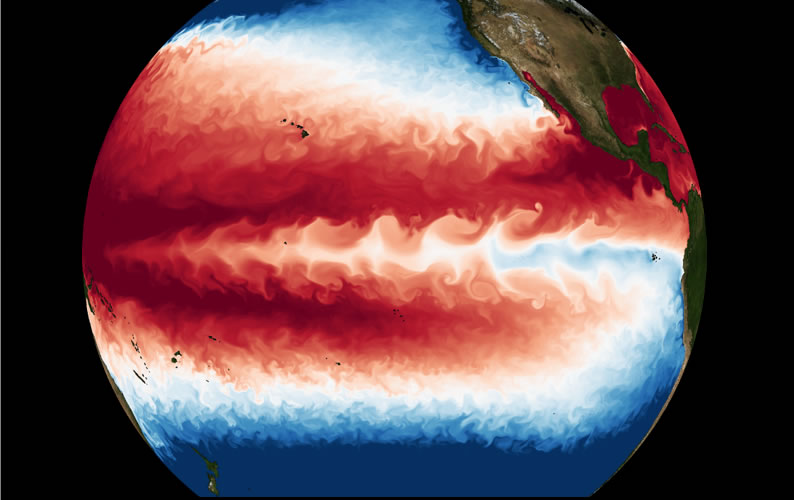
The recently published IPCC report discusses the effects of human activites on climate change. Malte Stuecker, Assistant Professor in the Department of Oceanography and the International Pacific Research Center (IPRC), is one of the contributing authors to the recent IPCC report. Stuecker summarizes that the latest IPCC report "shows clearly that if we do not drastically curb our emissions, we will head towards temperatures that Earth has not seen in millions of years." For more details, read the IPCC report orSOEST's news article.
IPRC's Malte Stuecker recognized as an AGU Outstanding Reviewer of 2020.
Honolulu, July 1, 2021
Malte Stuecker, Assistant Professor in the Department of Oceanography and the International Pacific Research Center (IPRC), has been recognized as one of American Geophysical Union (AGU) Publications' outstanding reviewers for his work in 2020, as selected by the editors of each journal. For more details, read the press release or the full announcement on AGU News. Congratulations Dr. Stuecker!
Diversity of the Boreal Summer Intraseasonal Oscillation
Honolulu, May 18, 2021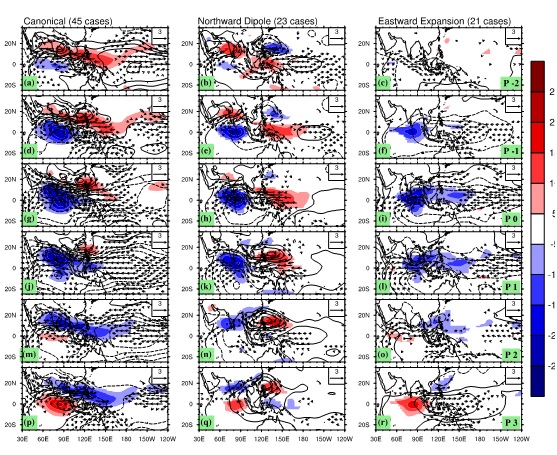
The daily weather can be accurately predicted within a week. The daily whether forecast drops its skill sharply in the second week and becomes impossible beyond the Weak 2. However, the tropical intraseasonal oscillation (ISO) is a phenomenon that provides a cornerstone for predicting weekly mean conditions from Week 2 to Week 8, which is known as subseasonal-to-seasonal (S2S) prediction. Boreal summer intraseasonal oscillation (BSISO) profoundly impacts northern hemisphere monsoon onsets and breaks, tropical cyclones, and many climate extremes, including flood, drought, and heatwaves.
The common characteristics of BSISO have been intensively investigated using the linear empirical orthogonal function analysis method. However, BSISO events differ from one another, exhibiting great diversity in their propagation and life cycle. Guosen Chen and IPRC researcher Bin Wang used nonlinear K-mean cluster analysis and objectively and systematically classified BSISO into three primary groups: the northeastward propagation, the dipolar northward propagation, and the eastward expansion. They show that the propagation diversity is related to BSISO's circulation structural asymmetries and the associated moistening processes. The BSISO's Rossby-wave component affected by the background monsoon vertical wind shear favors northward propagation while Its Kelvin-wave component favors eastward propagation. The BSISO's circulation structures are affected by the variations of background monsoon states, especially the season-dependent variations. The results provide insights into the origin of the BSISO diversity and potential precursors for foreseeing BSISO propagation. It also provides new metrics for validating climate models' capacity in capturing ISO diversity and helps to improve prediction models. For more detail, read the paper in Journal Geophysical Research: Atmospheres.
A Mechanism for Formation of the Western North Pacific Monsoon Trough: Nonlinear Upscale Cascade
Honolulu, April 15, 2021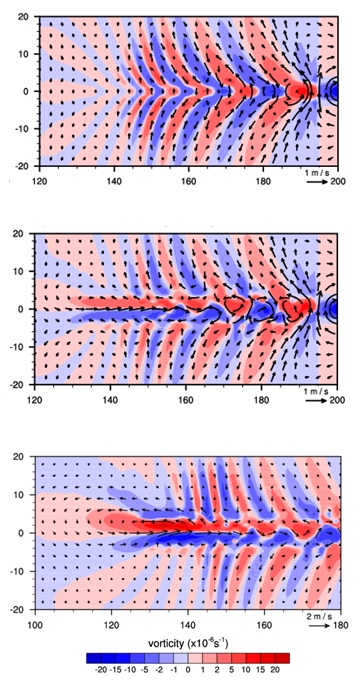
A unique feature of summertime atmospheric low-level circulation in the tropical western North Pacific (WNP) is a monsoon trough (MT) where westerlies meet easterlies. Such a confluence feature is not seen in other basins. A conventional view of the formation of the MT is attributed to hemispherically asymmetric sea surface temperature distribution in boreal summer. IPRC researcher Tim Li put forth an internal atmospheric dynamics mechanism, in which nonlinear upscale cascade plays a fundamental role. Linear and nonlinear barotropic vorticity model frameworks are constructed to understand the MT formation problem. The governing equation is written with respect to a background confluent zonal mean flow. A wave generator is specified in the eastern boundary, to mimic the activity of easterly waves in the Pacific. Under linear dynamics, the zonal length scale of easterly waves is contracted due to the mean flow impact, leading to the development of small-scale perturbations as the waves move westward (top panel). Under nonlinear dynamics, cyclonic (anticyclonic) wave perturbations shift northward (southward) away from the central latitude where the initial waves are generated due to a so-called vorticity segregation process. The merging of the small-scale perturbations leads to the generation of a pair of large-scale cyclonic and anti-cyclonic gyres, straddling across the central latitude (middle panel). The large-scale cyclonic flow can be further amplified when condensational heating is considered (bottom panel). For more detail, read the paper in Climate Dynamics.
Satellites can now observe how ocean eddies carry salt
Honolulu, March 10, 2021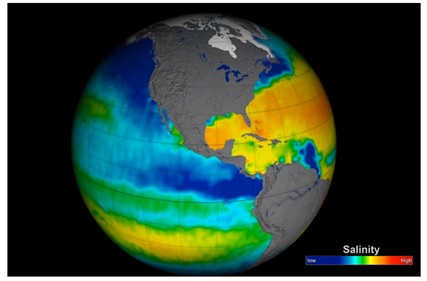
Salinity plays a central role in ocean processes and also reflects the evaporation/precipitation cycle in the ocean. Satellite technology in the last decade has made it possible to observe sea surface salinity (SSS) with unprecedented spatial and temporal resolution not available by other components of the global ocean observing system. IPRC researchers Oleg Melnichenko, Peter Hacker, and Vasco Müller took advantage of these newly available observations to assess the role played by mesoscale eddies in shaping the distribution of salt in the ocean. The task is complicated by the fact that satellite errors are comparable to the typical eddy-induced SSS signals. To both prove the concept and to provide reliable estimates of the eddy transport of salt, the authors used data from two satellite missions, NASA's Soil Moisture Active-Passive (SMAP) and ESA's Soil Moisture and Ocean Salinity (SMOS), and also used two different analysis methods. The study confirmed that the eddy transport of salt (or, equivalently, freshwater) is an essential component of the marine hydrological cycle that now can be characterized and quantified using satellite observations of SSS. For more detail, see AVISO's image of the month or read the paper itself in Remote Sensing.
Indian Ocean responsible for the East Asian summer monsoon record high rainfall in 2020
Honolulu, March 6, 2021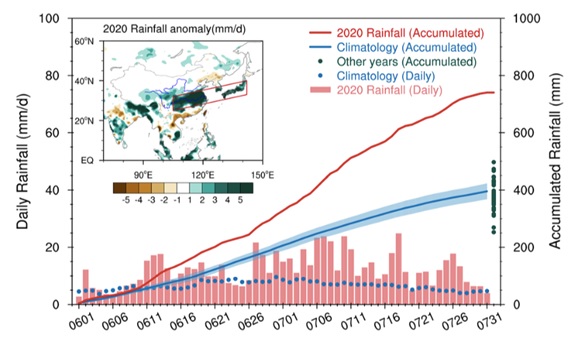
A new study co-authored by Malte Stuecker , Assistant Professor in the Department of Oceanography and IPRC, shows that 59 days of intense thunderstorms in the tropical Indian Ocean during June and July 2020 were responsible for the record high East Asian monsoon rainfall - thousands of miles to the northeast - during that year. For more details, read the paper in Geophysical Research Letters.
Enhanced Tropical Eastern Indian Ocean Rainfall Breaks down the Tropical Easterly Jet-Indian Rainfall Connection
Honolulu, February 22, 2021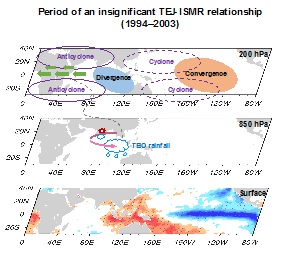
Indian summer monsoon rainfall (ISMR) is usually connected to tropical easterly jet (TEJ), a dominant tropical upper-tropospheric circulation system. A strong TEJ corresponds to an above-normal ISMR. However, Sihua Huang, Bin Wang, Zhiping Wen, and Zesheng Chen found this connection breaks down from 1994 to 2003, during which the rainfall variability over the tropical eastern Indian Ocean (TEIO) was abnormally enhanced due to the increased SST variability over the tropical southeastern Indian Ocean. The reason is that the enhanced TEIO rainfall anomalies can excite a low-level cyclonic circulation that reduces the ISMR, meanwhile strengthen the upper-level divergence and a pair of anticyclones, accelerating the TEJ (figure). Thus, the TEIO rainfall plays a more important role than the ISMR in the TEJ variability, causing the TEJ-ISMR relationship's breakdown. The cause of the increased SST variability over the tropical southeastern Indian Ocean remains elusive. For more details, read the paper in Journal of Climate.
Doubling tropical cyclone risk to Hawai'i possible
Honolulu, December 16, 2020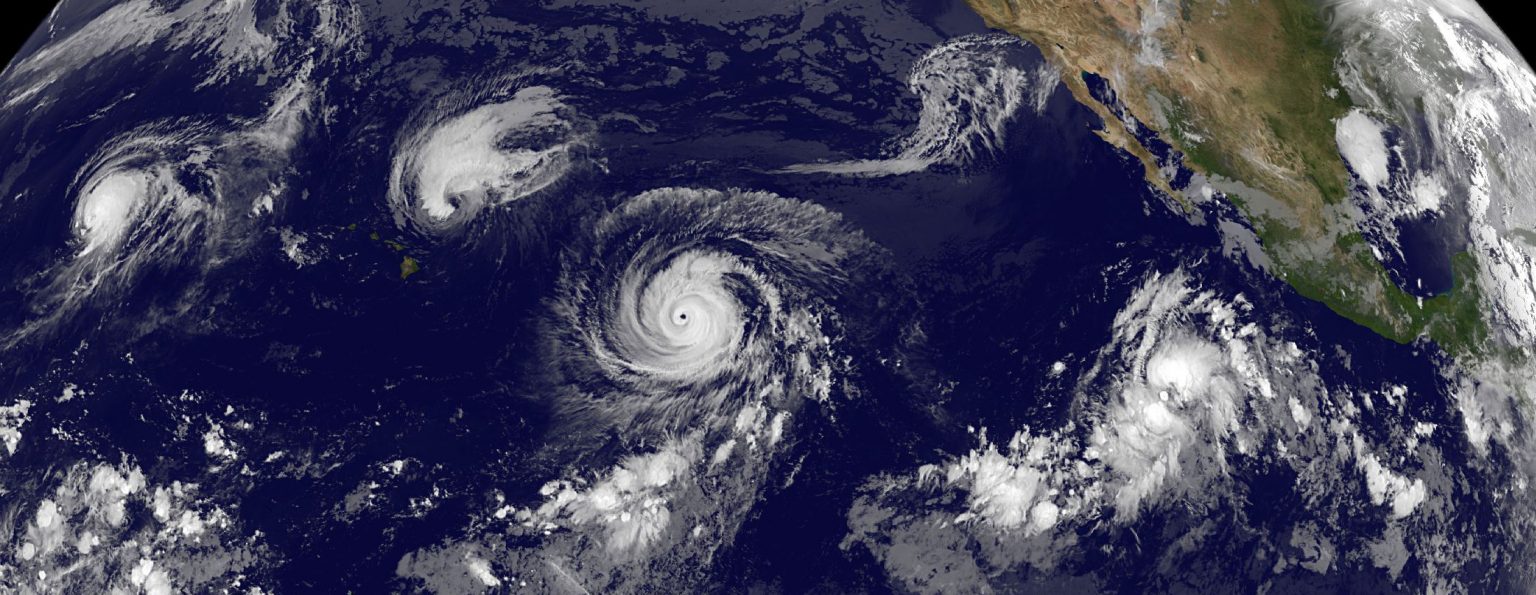
According to a study co-authored by Malte Stuecker, Assistant Professor in the Department of Oceanography and IPRC, global warming will intensify landfalling tropical cyclones of a category three or higher in the Indian and Pacific Oceans, while suppressing the formation of weaker events. In Hawai?i, model simulations show a doubling of the risk of landfalling tropical cyclones, if CO2 concentrations double. For more details, read this news release or the paper itself in Science Advances.
Accuracy of El Niño simulation hones climate change estimates
Honolulu, August 28, 2020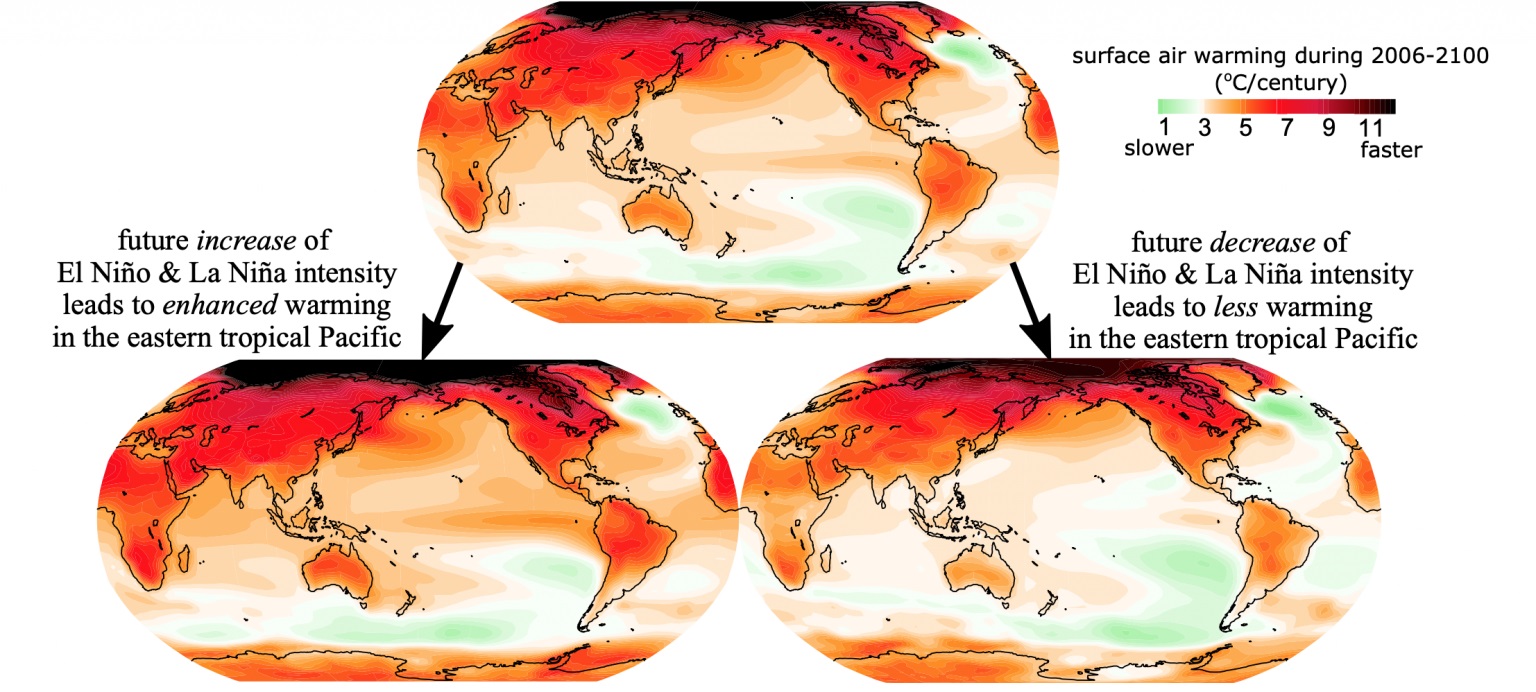
A new study co-authored by Malte Stuecker, Assistant Professor in the Department of Oceanography and IPRC, revealed that correctly simulating ocean current variations hundreds of feet below the ocean surface -- the so-called Pacific Equatorial Undercurrent -- during El Niño events is key in reducing the uncertainty of predictions of future warming in the eastern tropical Pacific. For more details, read this news release or the paper itself in Nature Communications.
New funding supports drought predictions in Hawai'i and Pacific Islands
Honolulu, August 21, 2020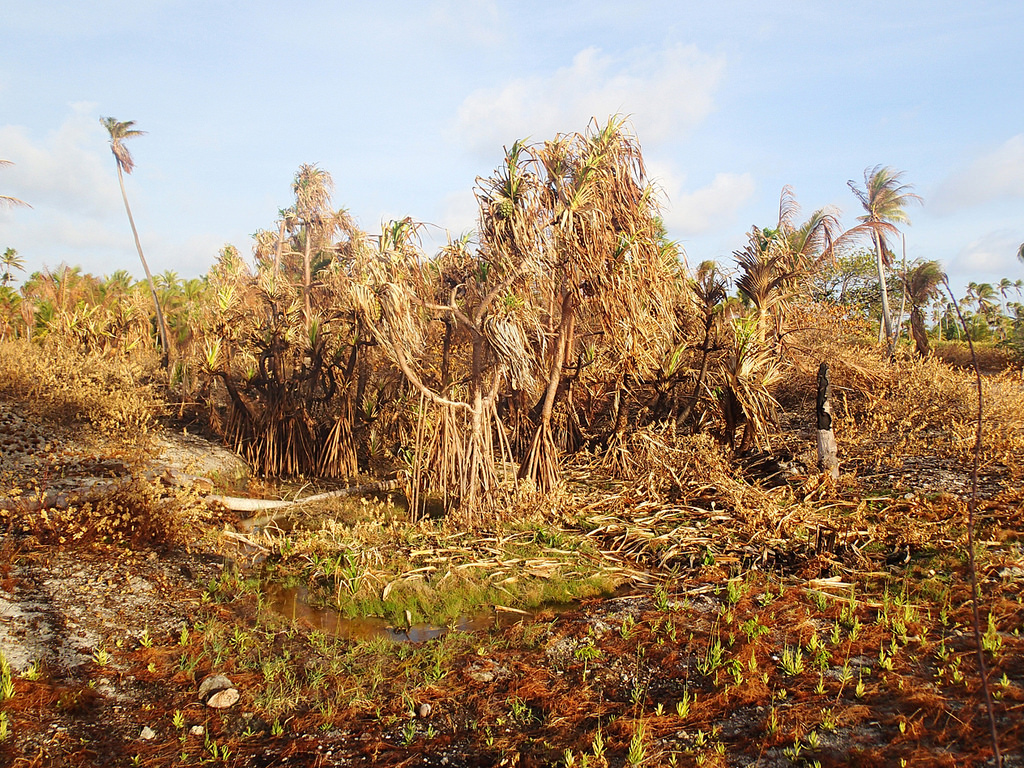
Researchers from IPRC and NOAA secured over $500,000 from NOAA's Modeling, Analysis, Predictions and Projections Program to assess factors affecting the intensity and duration of droughts over Hawai'i and U.S.-affiliated Pacific Islands (USAPI) and develop seasonal predictions of rainfall, including floods and droughts. During the three years of the award, IPRC senior researcher Hariharasubramanian (Anna) Annamalai, Arun Kumar with the Climate Prediction Center at NOAA, Maryland, and John Marra, director of Climate Services for the Pacific Islands at NOAA, Honolulu, will build on the seasonal predictions of rainfall, floods and droughts over Hawai'i and USAPI they have been working on for over a decade. Read the press release for more details.
New study shows the global atmosphere rings like a bell
Honolulu, July 6, 2020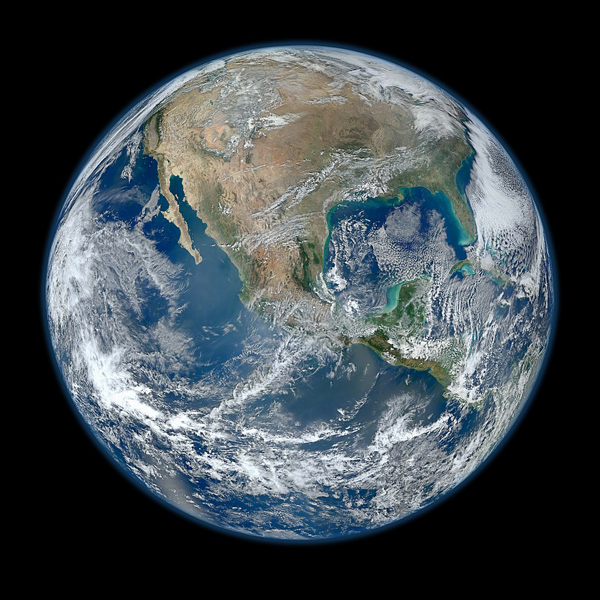
A recent study shows that the Earth's entire atmosphere vibrates like a ringing bell, in a striking confirmation of theories developed by physicists over the last two centuries. Takatoshi Sakazaki, a former IPRC post-doc and now an assistant professor at the Kyoto University Graduate School of Science, and Kevin Hamilton, an Emeritus Professor in the Department of Atmospheric Sciences and IPRC, use 38 years' worth of atmospheric pressure observations to reveal the presence of dozens of predicted wave modes. For more details, read this press release or the paper itself at the Journal of the Atmospheric Sciences. This work was featured in stories in The Atlantic and in Physics World.
New book addresses Earth's most dominant year-to-year climate variation
Honolulu, June 29, 2020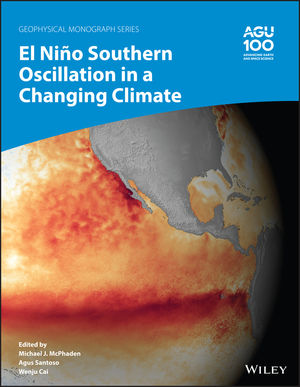
The El Niño Southern Oscillation (ENSO) in the Pacific Ocean has major worldwide social and economic consequences through its global scale effects on atmospheric and oceanic circulation, marine and terrestrial ecosystems, and other natural systems. Ongoing climate change is projected to significantly alter ENSO's dynamics and impacts. A new book, published by the American Geophysical Union, El Niño Southern Oscillation in a Changing Climate, presents the latest theories, models, and observations, and explores the challenges of forecasting ENSO as the climate continues to change.
SOEST researchers Fei-Fei Jin, Christina Karamperidou, Malte F. Stuecker, Tim Li, Bin Wang, Han-Ching Chen, Sen Zhao, and Matthew Widlansky from the Department of Atmospheric Sciences, Department of Oceanography and the IPRC contributed chapters to this comprehensive book. For more details, read this press release .
Expedition to remove debris from Great Pacific Garbage Patch begins
Honolulu, May 15, 2020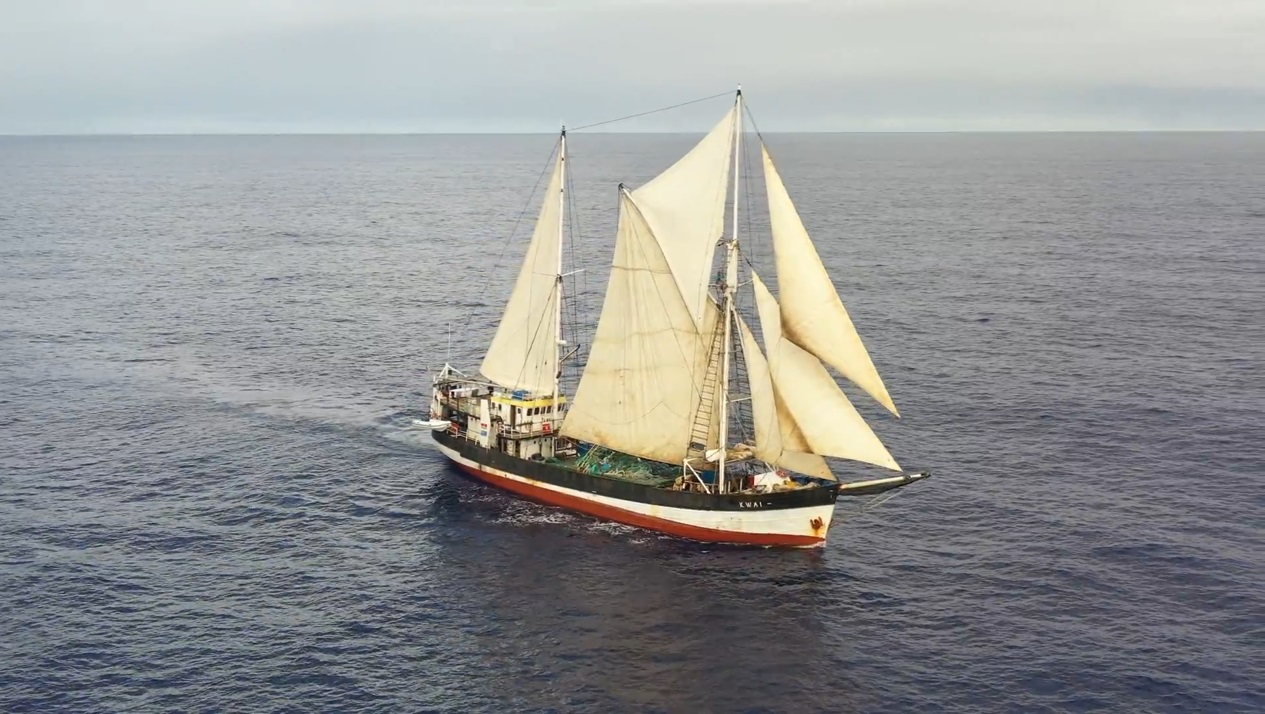
Nikolai Maximenko, researcher with SOEST's International Pacific Research Center, is leading a NASA-funded project FloatEco supporting a collaboration with Ocean Voyages Institute, Smithsonian Environmental Research Center, Lagrangian Drifter Laboratory at Scripps Institution of Oceanography, Applied Physics Laboratory at University of Washington, Williams College, and Fisheries and Oceans Canada to recover floating debris in the Great Pacific Garbage Patch and to study physical and biological processes controlling the ecosystem based on this debris. For more details, read the press release here or in The Maritime Executive
IPRC's James Potemra receives a 2020 UH Presidential Award
Honolulu, May 15, 2020
James Potemra, who has served IPRC in one way or another for nearly 22 years, just received the UH 2020 Presidential Award for Outstanding Service. The award honors a "staff member who demonstrates outstanding work performance, service, and leadership," which Jim certainly has. He has served IPRC as a postdoctoral fellow, assistant researcher, and, for the last 12 years, as assistant manager and then manager of the Asia-Pacific Data Research Center. His expertise in data management has provided a huge asset to the research world through the APDRC, as well as for the Pacific Island Ocean Observing System, the ENSO Applications Center, the ALOHA cable Observatory, and many other projects over the years. He has also shown his loyalty to community by served UH Mānoa in many advisory positions, including on the faculty senate. Congratulations to Jim on the honor of this recognition!
IPRC's Malte Stuecker recognized with prestigious early career award
Honolulu, January 6, 2020
Malte Stuecker, Assistant Professor in the Department of Oceanography and the International Pacific Research Center (IPRC), will receive the prestigious Kamide Lecture Award from the Atmospheric Sciences (AS) section of the Asia Oceania Geosciences Society (AOGS) this June at their annual meeting. This is the highest award for early career geoscientists in Asia and Oceania. Stuecker received his PhD in 2015 from the SOEST Atmospheric Sciences Department (advised by Dr. Fei-Fei Jin). He returned to SOEST after several years at other institutions. Stuecker was a NOAA Climate & Global Change postdoctoral fellow at the University of Washington. Then he worked as an Assistant Project Leader at the IBS Center for Climate Physics and as a Research Professor at Pusan National University, both in Busan, South Korea. For more details, read the press release. Congratulations Dr. Stuecker!
IPRC leads study that shows climate warming promises more frequent extreme El Niño events
Honolulu, October 21, 2019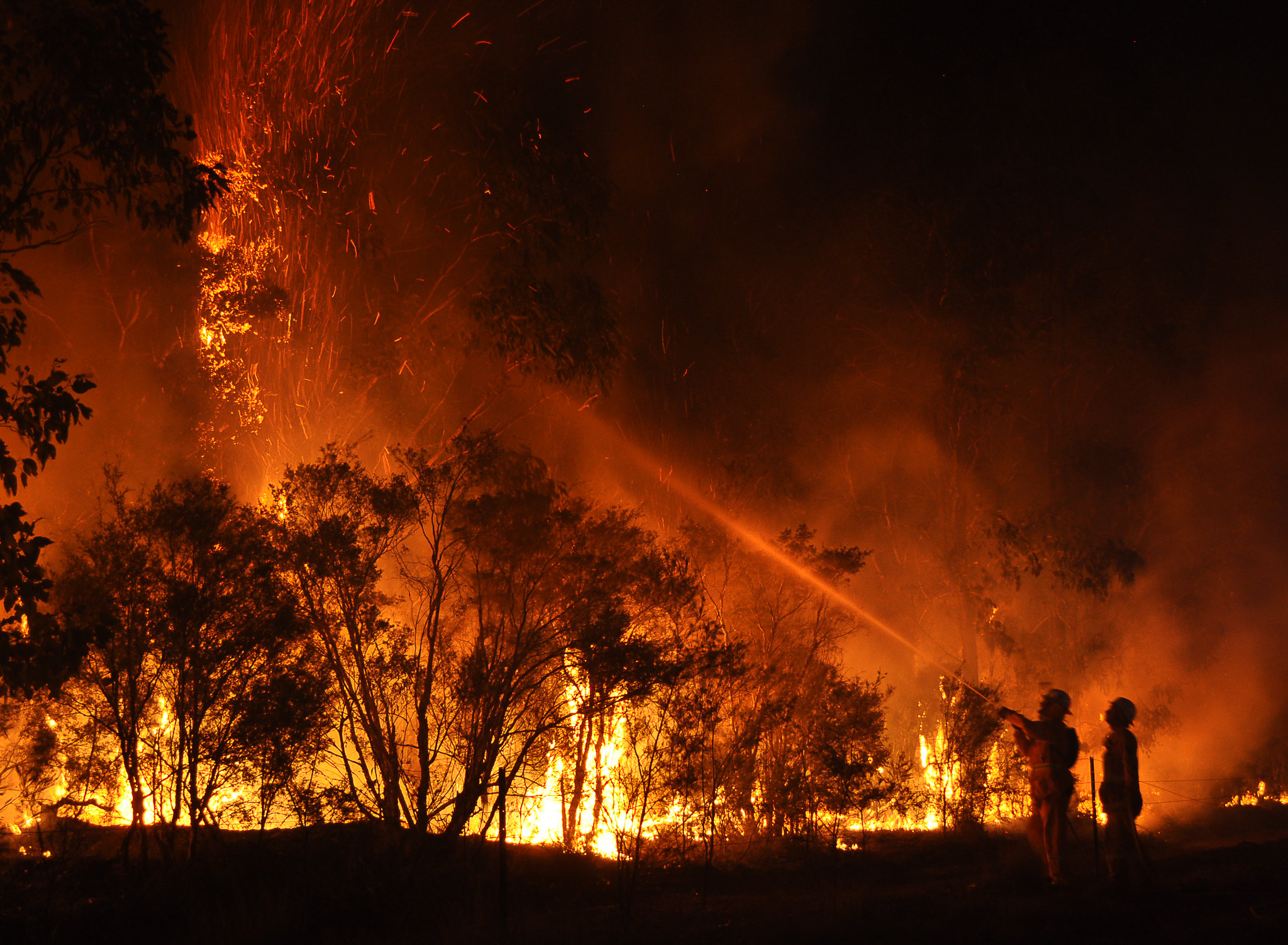
An important question that researchers have looked to answer is how climate change is affecting El Niño events, their frequency and strength. IPRC's Bin Wang led an international groups of climate scientists in an effort to answer this question. By examining 33 historical El Niño events since 1901, they found distinct shifts in behavior since climate warming became more pronounced in the 1970's which suggest more extreme events are in our future if warming continues. Read more details in this press release, this UH News story or the paper at PNAS.
Joint US-Japan Workshop on Climate Change co-hosted by IPRC
Honolulu, May 6, 2019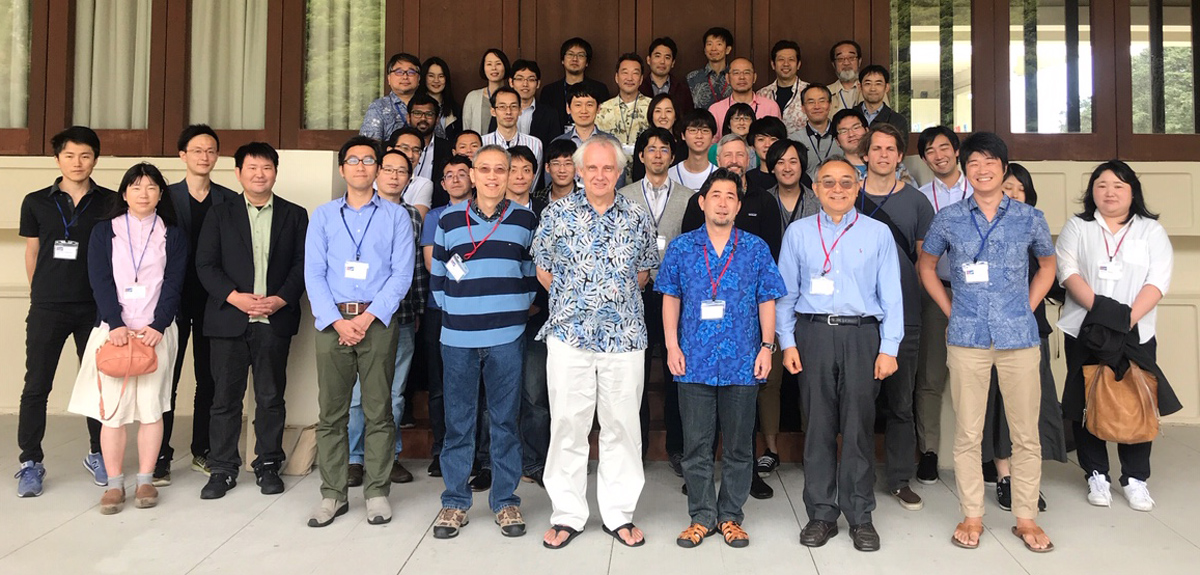
In March, the Joint US-Japan Workshop on Climate Change and Variability brought together scientists from Japan, Korea, and across the United States for a two-day meeting at the Hawai‘i Imin International Conference Center at the University of Hawai‘i. The workshop covered recent advances in topics such as regional climate change and impact assessments, climate variability, Earth system modeling, cloud-resolving simulations, near-term predictions, and long-term projections. The meeting was spearheaded by National Institute for Environmental Studies (NIES) scientist Tomoo Ogura and University of Tokyo professor Masahiro Watanabe, while IPRC scientists Kelvin Richards and Kazu Kikuchi helped with meeting preparations as local co-hosts. Participants greatly enjoyed the excellent local logistics, warm climate, and aloha spirit of Hawai‘i.
IPRC researcher receives prestigious university award
Honolulu, March 21, 2019
IPRC is pleased to announced that Tim Li, Professor of Atmospheric Sciences and a team leader and faculty member of IPRC since its inception, has been awarded the University of Hawai‘i's Board of Regents Medal for Excellence in Research. The medal is awarded "in recognition of scholarly contributions that expand the boundaries of knowledge and enrich the lives of students and the community," which Tim Li has certainly done for many years. With interests spanning many topics in tropical climate, weather dynamics, and large-scale atmosphere-ocean interactions, he has stood out in his exploration of the dynamics of the El Niño-Southern Oscillation (ENSO), the Madden-Julian Oscillation (MJO), the Tropospheric Biennial Oscillation (TBO), and tropical cyclone genesis and intensity change. Supported by current grants from NOAA, NSF, JAMSTEC, NRL, NUIST, and more, Li is also highly prolific, with over 200 peer-reviewed publications, 12 currently in press, and a recent, co-authored textbook titled "Fundamentals of Tropical Climate Dynamics." Congratulations to Dr. Li for this well-earned recognition!
IPRC Director presents keynote address at CATA 2019
Honolulu, March 21, 2019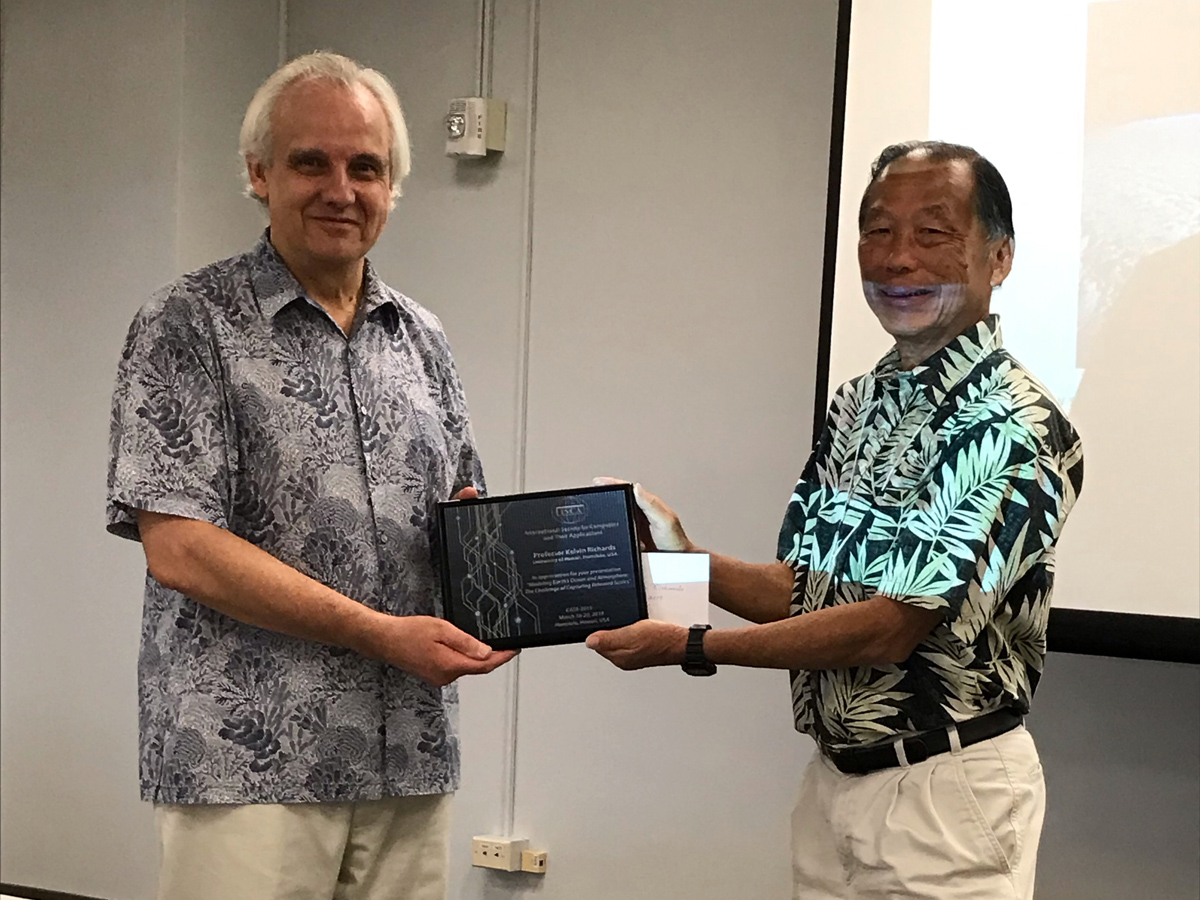
IPRC Director Kelvin Richards gave the keynote address to the International Society for Computers and Their Applications sponsored CATA 2019 conference held at the Waikiki Beach Marriott Resort this past week. Richards' talk, entitled "Modeling the Earth's Ocean and Atmosphere: The Challenge of Capturing Relevant Scales", discussed the impressive strides that have been made in computer modeling of the ocean/atmosphere system, much of which has happened through increases in computational power. He emphasized the importance of the many small-scale flow phenomena that can have large impacts on the ocean and atmosphere and which need a combined approach of observations and process models to properly represent them in climate models. The audience included researchers from diverse backgrounds interested in computers in education, healthcare, and business, as well as bioinformatics and computational biology.
Journal article by IPRC professor and co-author selected for the 2018 JMSJ Award
Honolulu, January 8, 2019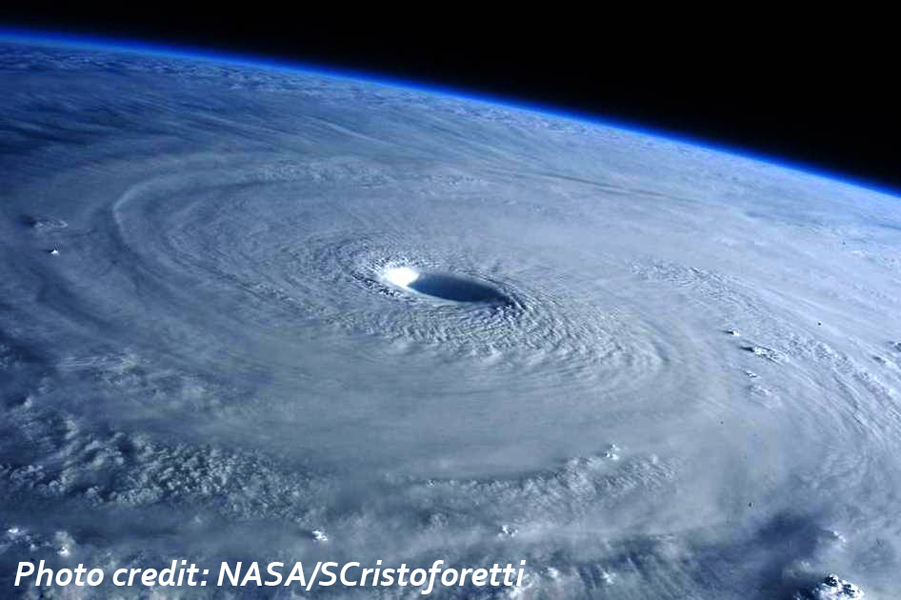
Congratulations to IPRC's Yuqing Wang and his co-author Jing Xu for receiving a 2018 JMSJ Award for their paper "Effect of the initial vortex structure on intensification of a numerically simulated tropical cyclone" (doi: 10.2151/jmsj.2018-014). The editorial committee of the Journal of the Meteorological Society of Japan gives the award to outstanding papers published each year in JMSJ and chose only three papers for 2018. Xu & Wang (2018) present evidence, based on model simulations in support of their earlier observational findings, that the rate and duration of the first strengthening (initial spin-up) and the subsequent intensification of a cyclone depends on its starting structure and size. Those cyclones with an initially small central eye (smaller "radius of maximum wind (RMW)") or with winds that drop off more quickly outward from the RMW, will intensify more rapidly. The duration of this intensification depends on how quickly the internal structure of the vortex develops, with cyclones with a larger initial RMW correlating with a longer initial spin-up period followed by a slower intensification. Compliments to the authors on the merits of this work being so recognized!
IPRC climate modeling contributes to understanding of increased future wildfire threat
Honolulu, October 10, 2018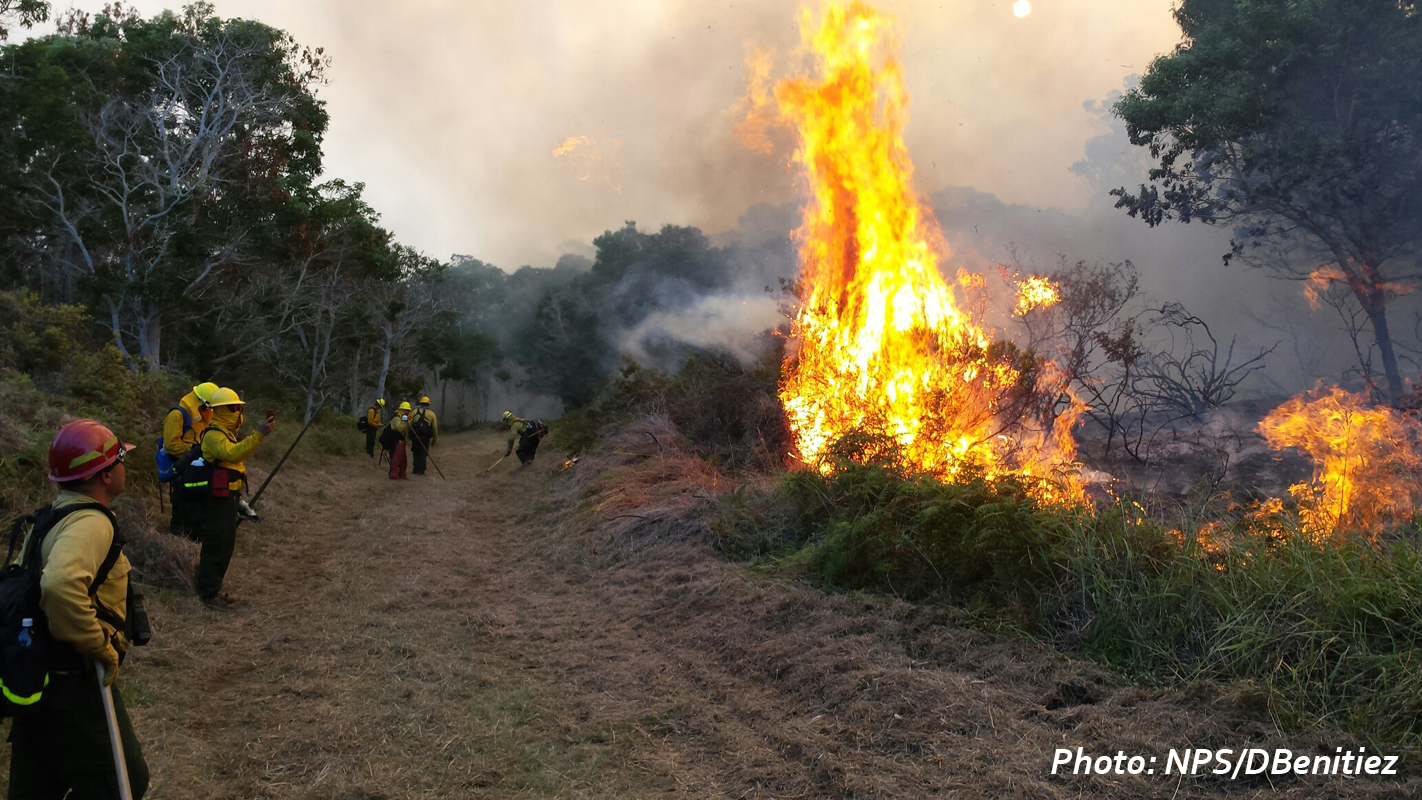
Wildfires have always been a hazard for certain areas of the Hawaiian Islands, particularly the drier, leeward sides. But the last several decades have seen an increase in fire frequency and intensity as the population has increased (people are the primary cause of fires) and, more importantly, conditions have become hotter and drier. IPRC's Kevin Hamilton was recently interviewed for a Hawaii NewsNow segment, referring to modeling results from work with IPRC's Yuqing Wang and Chunxi Zhang to explain the likelihood of worsening wildfire conditions with future heating and drying of the islands, particularly on the leeward sides. Watch his interview here, and read the accompanying extended article about Hawai‘i's wildfires here.
IPRC modeler receives half-million dollar grant to improve models
Honolulu, September 5, 2018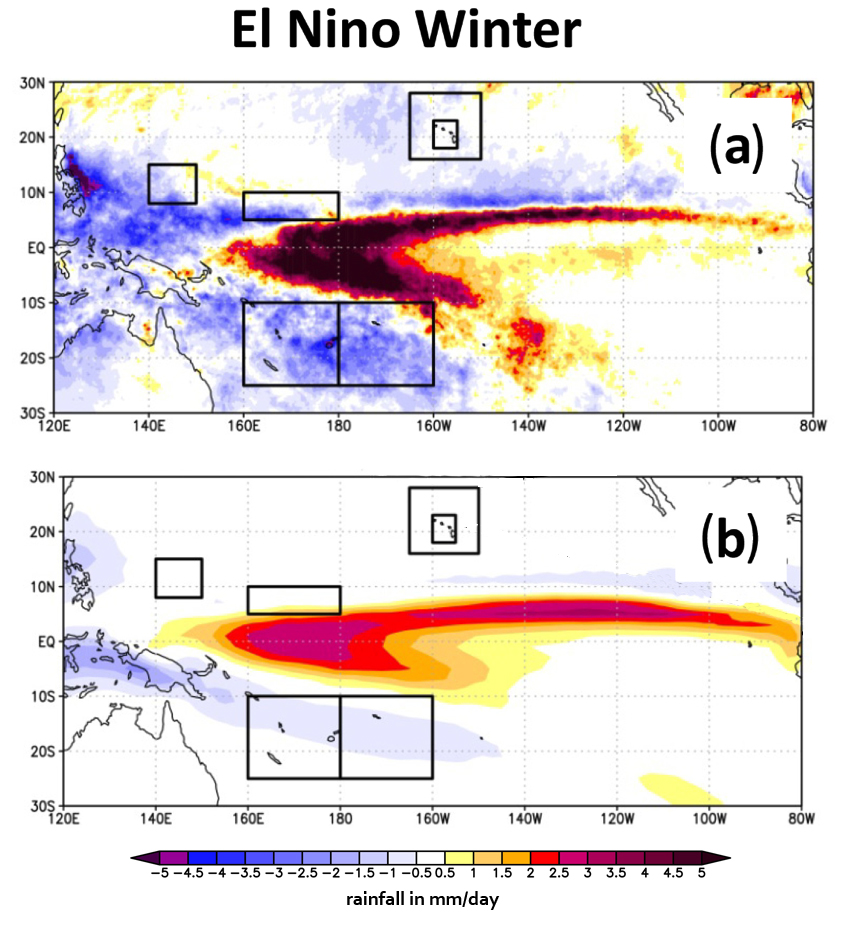
H. Annamalai, a senior IPRC researcher, is the recipient of a $508k grant from NOAA Research Modeling, Analysis, Predictions, and Projections (MAPP) Program. The project he is leading will develop diagnostic tools to identify and evaluate errors in climate models for the US Affiliated Pacific Islands region. These tools aim to help modelers refine and improve their models of the region, especially those trying to forecast abnormal precipitation patterns associated with El Niño events. Read more details here.
Detailing El Niño variability to enhance future forecasting
Honolulu, July 31, 2018
The El Niño-Southern Oscillation (ENSO) is a recurrent climatic phenomenon of two phases–El Niño and La Niña–characterized by swings in the temperature of the eastern equatorial Pacific Ocean and affecting wind and rainfall patterns globally. With greater understanding of these global effects has come an increased recognition of the variability of the ENSO phenomenon and the complexities in the climatic mechanisms associated with its timing, duration, spatial pattern, predictability, and the magnitude of its impacts locally and worldwide. An international team of over forty climate scientists met last October at the Institute for Basic Science Center for Climate Physics at Pusan National University, South Korea, to discuss the current understanding of the diversity and complexity of ENSO events. They have just published a paper in Nature, under the leadership of IPRC's Axel Timmermann, detailing their findings of two overlapping atmosphere-ocean cycles that play key roles in determining the variability of the phenomenon. Read more about the efforts here or view an excellent video explanation of El Niño and its behavior here.
IPRC researchers establish link between hiatus conditions and increased numbers of intense cyclones in northwestern Pacific Ocean
Honolulu, April 27, 2018
In recent decades, there has been an unexpected increase in the intensity and frequency of strong tropical cyclones in the northwestern region of the Pacific Ocean, along the coastline of East Asia. IPRC visiting researchers Jiuwei Zhao and Ruifen Zhan, led by IPRC's Yuqing Wang, published a study recently in Scientific Reports showing a strong correlation between conditions during the Global Warming Hiatus of 1998-2012 and the increased numbers and strengths of cyclones in the region during that period. Conditions during the Hiatus mimicked those typical of La Niña events, with sea surface temperatures and wind patterns promoting formation, intensification, and landfall of cyclones in the far northwestern Pacific Ocean. Read more details of their study in this press release or their published paper.
Low-lying Pacific Islands may become uninhabitable sooner than previously thought
Honolulu, April 25, 2018
A new study published today looks at island habitability in a new light and has some troubling results. It has been known for years that low-lying atoll islands are threatened by sea level rise, and previous estimates have been made suggesting that by the end of the century, sea level will be high enough that atolls will become inundated. However, this new study, with climate modeling contributions from IPRC's H. Annamalai and Matthew Widlansky, considers the effects of wave action in addition to elevated sea levels. Projections of wave-driven flooding suggest freshwater resources on these islands will be irrevocably contaminated by mid-century (2030-2060), which, when combined with repeated damage to infrastructure, would render Pacific atolls uninhabitable. Read more details in this press release, in the published paper in Scientific Advances, or in this Honolulu Star-Advertiser story.
IPRC Marine Debris Researcher investigates a big catch!
Honolulu, February 20, 2018
The Marine Debris group at IPRC, led by Nikolai Maximenko, has spent years tracking the pathways of debris around the Pacific Basin and beyond. Material washes up across all the Hawaiian islands, from wooden beams and refrigerator doors to bags and microplastics, but Kamilo Point on Hawai‘i Island is known for unusually high concentrations of marine litter. Recently, the largest accumulation of fishing nets seen in the islands was found on Kamilo Beach by the Hawai‘i Wildlife Fund, who relayed the sighting to Sarah-Jeanne Royer, a new post-doctoral fellow working with the IPRC Marine Debris group. At an estimated 40 tons, the pile of nets likely comes from fishing grounds in the northern North Pacific Ocean, by way of the so-called Garbage Patch at the center of the northern gyre. The find supplies a new data point for Royer's work in the ongoing efforts to track Pacific debris pathways to show how man-made debris changes the global geography of the ocean ecosystem. Watch an interview with Royer at Hawaii News Now here.
IPRC participates in the Years of the Maritime Continent campaign
Honolulu, February 01, 2018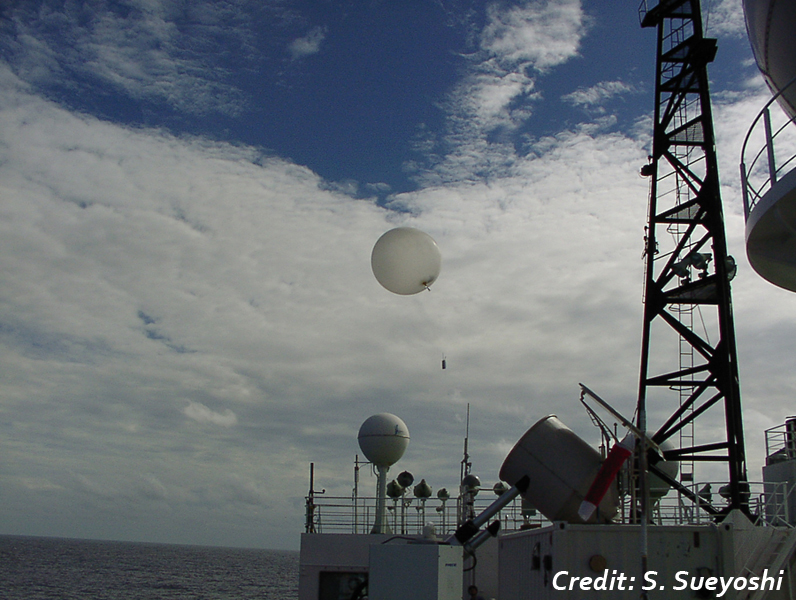
IPRC Director Kelvin Richards spent Thanksgiving, Christmas, and the New Year onboard the JAMSTEC research vessel the R/V Mirai. The research cruise was part of an international campaign called the Years of the Maritime Continent (YMC). The goal of the YMC is to use observations and modeling to improve understanding and prediction of the local variability, and global impact, of the Maritime weather-climate system of Earth's largest archipelago. Much the R/V Mirai cruise was spent off the coast of Sumatra observing the atmosphere and ocean. Richards' particular interest is how the ocean responds to the changing atmosphere and possible feedbacks that might arise. Other IPRC involvement in the YMC includes the JAMSTEC IPRC Joint Initiative (JIJI) and other NOAA funded projects. Read more about the YMC and the Mirai cruise here.
Beautiful sunsets after volcanic eruptions may lend insight into historical stratospheric wind patterns
Honolulu, January 04, 2018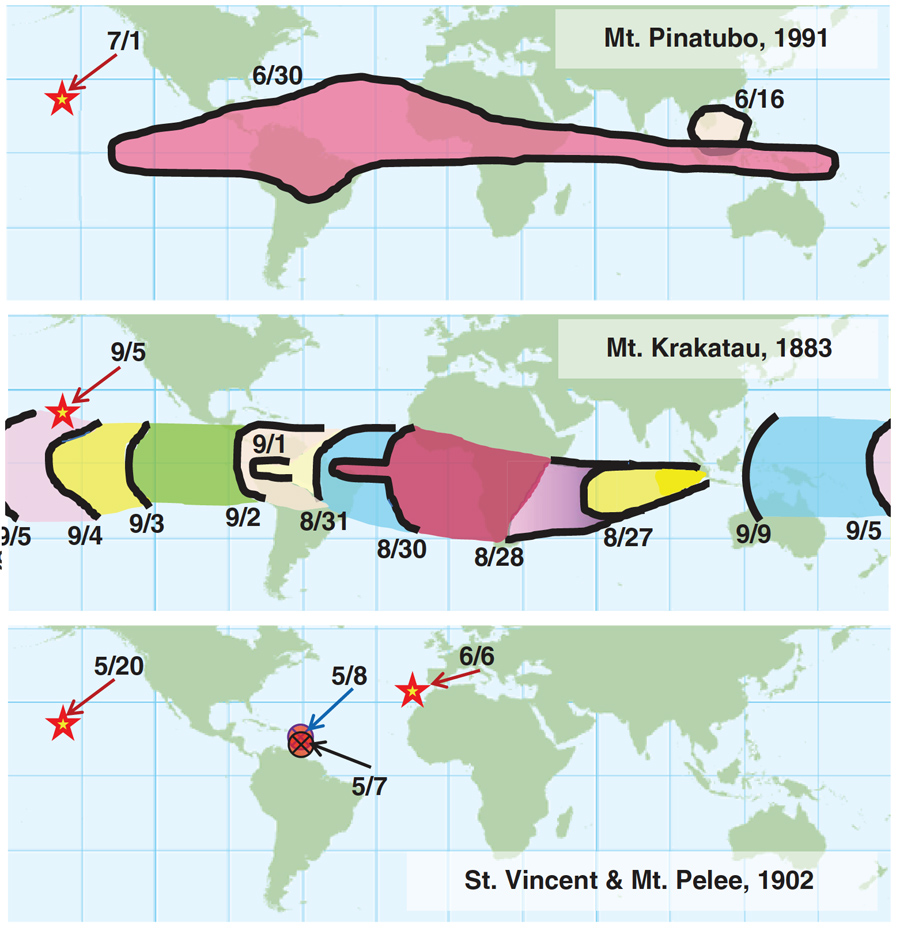
Large explosive volcanic eruptions are known to throw aerosols high into the atmosphere, and as high altitude winds blow them around the globe, beautiful sunsets follow, tracking the progress of the volcanic products. IPRC researchers Kevin Hamilton and Takatoshi Sakazaki took advantage of this phenomenon to explore the possibility of characterizing historic stratospheric wind patterns by compiling accounts of the timing and locations of colorful sunsets following equatorial volcanic eruptions. Ultimately, learning more about the wind patterns will contribute to understanding the historic behavior of the Quasi-Biennial Oscillation (QBO), a long-standing pattern of alternating eastward- and westward-prevailing, high-altitude equatorial winds. Read more here and read a Guardian article mentioning the work here.
IPRC researchers reach out to the community as part of Open House
Honolulu, October 19, 2017
In the past, Tobias Friedrich, an IPRC postdoctoral fellow, has created startling global simulations of how acidic the oceans may get in the future. Now, he is demonstrating those effects on a more intimate scale at the University of Hawai‘i School of Ocean and Earth Science and Technology (SOEST) Open House on the UH Mānoa campus, taking place October 20 & 21. Watch a preview of his demo in this interview with Hawaii News Now. Also running exhibits are Jan Hafner, showing some of the marine debris that has arrived on our shores and how it got here; Niklas Schneider, describing the effects of Earth's rotation on generating currents; and Matthew Widlansky, now with the UH Sea Level Center, demonstrating the effects of melting ice on sea level rise. Don't miss the fun!
Destructive potential of cyclones increases with ocean warming, modelers find
Honolulu, September 22, 2017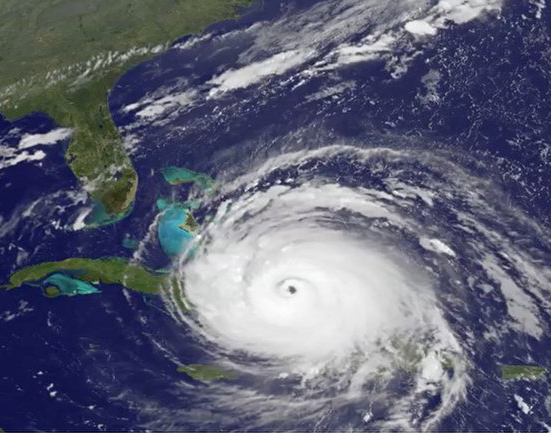
This storm season in particular has brought with it some supersized, and super-destructive, hurricanes in the Atlantic basin, raising the question in many minds of what role, if any, has climate change played in the formation and enlargement of these storms. One of IPRC's climate modelers, Tim Li, was recently involved in a study that examined this very question: what is the impact of ocean warming on the size and destructiveness of tropical cyclones. The results of the study were not a complete surprise, but do imply that a warning about future storms in the Pacific and Atlantic Oceans is warranted. Read more here.
IPRC post-doctoral researcher earns prestigious appointment from Kyoto University
Honolulu, September 18, 2017
Takatoshi Sakazaki, a visiting IPRC post-doctoral researcher with a JSPS (Japan Society for the Promotion of Science) fellowship, has been selected as a Hakubi Researcher through the Kyoto University Hakubi Center for Advanced Research. After extensive screening and interviewing, twelve applicants, out of 382, were chosen to receive an assistant professor position and five years of grant funding. The prestigious appointments are made from a diverse range of disciplines, this year's group covering economics, astronomy, literature, political science, engineering, neurology, law, climatology, and more. In fact, Sakazaki and an IPRC predecessor Hiroki Tokinaga, who received a Hakubi appointment in 2014, are the only two scholars chosen from the climate/meteorology field since the program began in 2010. Sakazaki plans to continue his fellowship at IPRC until he begins his new position at Kyoto on April 1.
IPRC study contributes to picture of shifting climate conditions for Hawai‘i
Honolulu, August 16, 2017
Those living in Hawai‘i in 1992 will always remember Hurricane Iniki and the devastation it brought to Kauai, but it was only the second hurricane to make landfall (as a hurricane) in the Hawaiian Islands since records were kept. (Hurricane Dot also hit Kauai, in 1959.) Imagine, though, if instead of 2 hurricanes in 70 years directly impacting Hawai‘i, there were 4-8 hurricanes--Hawai‘i would be much more vulnerable! New projections by IPRC climate researchers Chunxi Zhang and Yuqing Wang, published recently in Journal of Climate, suggest that with warming oceans, the northern central Pacific could see an increase in the number and intensity of cyclones. Kevin Hamilton, former IPRC director, noted in a recent news story describing the shifts in Hawai‘i's climate, that the frequency of hurricanes that could cause substantial damage to Hawai‘i could increase by 60% by the end of the century. For more details, visit the Hawaii New Now story and video, or link to the original paper here.
Analysis of Flight MH370 likely debris trajectories awarded Denny Medal
Honolulu, May 12, 2017
IPRC's Nikolai Maximenko and Jan Hafner are co-authors of the paper Analysis of flight MH370 potential debris trajectories using ocean observations and numerical model results, which was awarded the 2016 prestigious Denny Silver Gilt Medal by the Institute of Marine Engineering Science and Technology for the best paper published over the course of one year in the Journal of Operational Oceanography. The first author of the paper, Joaquin A. Trinanes, received the medal at a reception of the Joint Technical Commission for Oceanography and Marine Meteorology, Ship Observation Team Meeting (SOT-9) in London, UK, end of March. The paper explored the possibilities of using models, remote sensing, and in situ data for practical purposes. The presentation of the award within the scope of the SOT meeting signals the importance of efforts that bring people together in developing a sustainable and efficient ocean observation network.
IPRC modelers examine the future of snow in Hawai‘i
Honolulu, May 2, 2017
Thoughts of Hawai‘i tend to conjure images of sun-soaked beaches and waving palms, not snow. However, on the highest peaks in the state, Mauna Kea and Mauna Loa on Hawai‘i Island, winter often generates a blanketing of snow for at least a few days a year. IPRC's Chunxi Zhang found that despite the local aesthetic and economic value of the snow, there was viturally no systematic observations of this snow activity. With Kevin Hamilton and Yuqing Wang, he developed a new daily index of snow cover on the mountains from examination of satellite spectral imagery from 2000 to 2015. Using that data for groundtruthing, he modeled the future of Hawai‘i's mountain snow. Read more in the press release. Read a short piece about the study in the local Hawaii Tribune Herald.
IPRC Director instrumental in arranging agreement with Tohoku University
Honolulu, April 4, 2017
Last week, Dean Brian Taylor of the School of Ocean and Earth Science and Technology (SOEST) at the University of Hawai‘i at Mānoa and Dean Tadahiro Hayasaka of the Graduate School of Science and Faculty of Science at Tohoku University, Japan, met to sign a memorandum officially beginning a new collaborative program between the two institutions. The program, initiated by IPRC's Director Kelvin Richards, will involve the exchange of both students and faculty from the two multi-disciplinary schools. Read more here.
Exploring ocean eddies marked IPRC's Submesoscale mini-workshop
Honolulu, March 21, 2017
Local and visiting researchers gathered at the beginning of March for a short afternoon workshop exploring the small (1 km) to medium (100 km) scale motions (referred to as submesoscale) that characterize the stirring and mixing of the upper ocean. The international crowd hailed from IPRC, UH Department of Oceanography, IFREMER, JAMSTEC, Tohoku University, and JPL. Read more about the workshop here.
Effects of volcanic activity on ocean productivity examined by IPRC researchers
Honolulu, March 16, 2017
A recent uptick in lava activity at Kilauea has brought to the fore some recent research by IPRC's Megumi Chikamoto and Axel Timmermann. The international project, led by Chikamoto and published last year in Geophysical Research Letters, focused on the effects of volcanic activity on the biological productivity of the upper layers of the ocean. They discovered using three separate models that large volcanic ash plumes introduced into the atmosphere may induce widespread cooling across the nearby ocean, which enhances mixing in the upper ocean. In turn, this would increase nutrient delivery to this biologically active zone, thereby enhancing biological productivity. Chikamoto's work received a nod in an article in The Atlantic reporting on the local efforts to examine the effects of the newest gush of lava on marine life and productivity near the ocean entry of Pu‘u ‘O‘o. Read the original abstract here, or the magazine article here.
IPRC researchers turn to the upper atmosphere to explain tropical rainfall patterns
Honolulu, February 9, 2017
With the threat of changing precipitation patterns across the globe, it has become increasingly important to understand what governs the rainfall patterns we see today. A team of IPRC climate modelers, led by postdoctoral researcher Takatoshi Sakazaki, has investigated what causes a tropical rainfall abundance pattern of two distinct peaks, 12 hours apart. The results of the study, recently published online at Geophysical Research Letters, suggest that the temporal pattern is attributable to a well-known phenomenon called an "atmospheric tide." A global pressure wave daily develops in the upper atmosphere, driven by sunlight heating of the ozone layer, and propagates downward to the land surface below. Rainfall concentrates during low-pressure periods. Read more in the press release. Sakazaki's work also got a nod in the Minneapolis Star-Tribune's weather blog (scroll about half-way down). Watch an appearance of Sakazaki and co-author Kevin Hamilton on Think Tech Hawaii.
News Archive
2016, 2015, 2014, 2013, 2012, 2011, 2010, 2009, 2008, 2007, 2006, 2004, 2003, 2002, 2001, 2000